Now, three weeks after the exchange and having settled back to Finland, it is time to go back in time and think about Japan again.
The endless chain of unforgettable adventures from Tokyo to Okinawa and South Korea, the cultural differences always waiting for you behind the next ramen store, all the little things in the everyday life at the campus, the sharehouse and the conbinis.
Friends from so many different countries from all around the world with just as many different backgrounds, tied together in the crossfire of the never-ending tests and quizzes of the language course and the survival battle of the poorest (students) in one of the most expensive cities you can find.
We set off to Japan with very cautious expectations, in order to prepare as well as possible for what was to come and not to be disappointed should we mess something up while at it in Tokyo. We expected
1) to have to use a ridiculous amount of €€€ per month for housing, food and transportation just to survive,
2) to ride metros so full of people that we could not take a step and
3) to find out that no one speaks English in the whole country.
This actually worked: we took two basic courses in Japanese before the exchange, and without hesitation, we joined the language teaching at our host university later on, even though it was not obligatory. Most people did not speak a word of English, so this was great preparation and helped a lot. For something complicated such as opening bank and phone accounts, try the big places such as Bic Camera in Shinjuku for phone connection and Japan Post Bank head office in at Tokyo Station. Metros were crazy-crowded indeed, but luckily our lectures were later in the day and we did not have to ride any rush hour metros. Don't use rush hour metros, you really really really don't want to do that.
One thing got us off-guard, though: bureaucracy. In case Things can be accomplished if you're persistent like granny in the snow (an excellent Finnish proverb) and run your errands in a polite and respectful manner, but for the sake of your mental health and to save your free time between the studies, do act within the deadlines the university gives you!
Open mind is your best friend in Japan. Be spontaneous, be curious, don't hesitate to jump into new things and always remember healthy respect towards others. With the right attitude you will find all the help you need, enjoy your time the most and everything will go well in the end.
The crazy moments spent explaining something important to someone who doesn't speak English yet somehow magically you reach understanding after half an hour of talking. The wow moments when you discover something new, something so huge and different compared to your home country. The memories, the ones of the good times and those of the harder times.
All that made our time in exchange in Japan something that we will never forget.
***
Our travels included far more destinations than Okinawa and South Korea. For more information, absolutely fabulous images and useful travel tips for those who travel inside Japan, do check out our Instagram channel @our157daysinjapan:
https://www.instagram.com/our157daysinjapan/
Our 157 days in Japan
Hello there!! I am a student of Aalto University School of Business. Now I am exchange student in Japan for 5 months. My exchange school is Sophia University in Tokyo. Because having a travel blog is obligatory in my home University so TADAAA here it is!! Going together with me to Japan is Teemu (Master's degree in Communication) he is also a contributor of this blog. We hope this blog will help you to prepare and enjoy your exchange time too. Pay it forward!!!
Thursday, 9 March 2017
Wednesday, 8 March 2017
About the courses and studies at Sophia University
Already before you leave for Japan, you will be asked to
fill in a form called Learning Agreement. For us Master’s students, we have to
fill in that form courses worth 24 credits. In the case of Sophia University, the
first complication is that at Sophia the credits are not counted the same way
as at Aalto: 8 credits at Aalto equals 4 credits at Sophia. So, you will need
to pick three courses (most of the courses available for exchange students seem
to be 4cr) to have enough studies for your exchange. Personally, I highly
recommend taking a course in Japanese language as one (because you really need the language to survive in Japan), leaving you able to pick
two courses more related to your major at Aalto.
This is where you can find the online syllabus of Sophia
University:
The syllabus includes all the study programmes, which is a LOT
of courses, so you might want to narrow it down a little bit. Unfortunately, it
was not possible to only choose the courses that are taught in English, so we
could not filter it any better than by the programmes that are taught at the Yotsuya
campus, the only campus where we exchange students could take studies.
The Master’s Programmes in Global Studies, Economics and
Global Environmental Studies all include courses that are held in English and
are possible for us to study (if your background is adequate). The syllabus
search engine did cause some serious frustration with the course selection, as
most course titles that appear in the search results are in English, yet when
you clicked the title to see the details of the course you would most often
find only Japanese text, meaning that actually the course is only for those
with native-level Japanese. Hopefully they will make some changes here sometime
soon.
About the Japanese language course, I wish I had known back
then that in the beginning of each semester, Sophia will organize a language
course placement test that will determine the level of your language studies
and therefore the very specific course that you will be placed in. There are so
many different language study groups and all the course codes, but actually you
don’t have to worry about it at all – the school will find you a suitable group
based on the results of your test.
If you don’t have any prior knowledge of Japanese language,
or if you have but still wish to start studying from the very basics (it starts
with learning hiragana and katakana), then just skip the language test and you
will be placed in one of those beginners’ groups.
At Sophia, I tried to find courses related to my major, but I
could not find any that would directly be about corporate communication.
Therefore, I chose courses Corporate Finance and Corporate Strategy, since this
was the perfect chance to study other interesting subjects outside my own
degree programme. The content of the strategy course was not unfamiliar to me,
but studying it now for a period of over four months certainly increased my
understanding of the topic and gave a far more concrete idea of the strategy
work at corporations.
I can recommend the strategy course to everyone who has some
background in strategy, as well as I can recommend the finance class to
everyone who wants to learn about the portfolio theory and some of the basic
principles of corporate finance.
Hopefully you find this information helpful, I know it would've decreased my stress level before the exchange for sure!
Friday, 3 March 2017
My time in the sharehouse in Nishiarai
This link is exactly where i live
http://gghouse.co.jp/en/property/a3/
This is how my room looks like
It is cozy and has plenty of space for me even though at first, I was very skeptical about it.
The area is very quiet and about 20 meters away, there is a police station so I would not be scared of thieves.
GG house provides the house with a fast internet connection, hairdryers, a washing machine, hangers for clothes, cooking oil and seasoning, pot, pan, dishes, chopsticks, vacuum etc,... really, there are more things available than you need :D and it is all included in the price. Every 5 days, there is a cleaning lady to come and clean up but if you have any common sense, you should clean your mess after cooking and personal business too.
On the other side of the house, there is a cheap food store and Seria 100 yen shop, and near Nishi arai station which is 10 mins away, there is Aeon (food store also but bigger). I have to say the location is very awesome.
However, the transportation from Nishi Arai to Tokyo is a bit minus, it takes about 45 minutes but I need to trade-off. However, Hibiya line is not very much crowded like other lines in center of Tokyo so I guess it is not that bad. For me, I have class at 11 am every day so I need to wake up at 9 at the latest and then start to get out of the house at 9.35 to catch the train at 9.47 to arrive Yotsuya at 10.45.
I have to say I had a great time living in GG house with no hesitation. However, I had some problems with people living in the same share house because of their hygiene and messing schedule but that is not GG house problem, I guess I need to raise my voice :(.
If you choose to live there (or anywhere), make sure that you read the contract carefully, follow the rule, please be clean in the common space, and appreciate others. Then every moment living there, it will be like your real home!
Stay tuned!
http://gghouse.co.jp/en/property/a3/
This is how my room looks like
It is cozy and has plenty of space for me even though at first, I was very skeptical about it.
The area is very quiet and about 20 meters away, there is a police station so I would not be scared of thieves.
GG house provides the house with a fast internet connection, hairdryers, a washing machine, hangers for clothes, cooking oil and seasoning, pot, pan, dishes, chopsticks, vacuum etc,... really, there are more things available than you need :D and it is all included in the price. Every 5 days, there is a cleaning lady to come and clean up but if you have any common sense, you should clean your mess after cooking and personal business too.
On the other side of the house, there is a cheap food store and Seria 100 yen shop, and near Nishi arai station which is 10 mins away, there is Aeon (food store also but bigger). I have to say the location is very awesome.
However, the transportation from Nishi Arai to Tokyo is a bit minus, it takes about 45 minutes but I need to trade-off. However, Hibiya line is not very much crowded like other lines in center of Tokyo so I guess it is not that bad. For me, I have class at 11 am every day so I need to wake up at 9 at the latest and then start to get out of the house at 9.35 to catch the train at 9.47 to arrive Yotsuya at 10.45.
I have to say I had a great time living in GG house with no hesitation. However, I had some problems with people living in the same share house because of their hygiene and messing schedule but that is not GG house problem, I guess I need to raise my voice :(.
If you choose to live there (or anywhere), make sure that you read the contract carefully, follow the rule, please be clean in the common space, and appreciate others. Then every moment living there, it will be like your real home!
Stay tuned!
Friday, 24 February 2017
What to bring to Japan? (especially for Finnish student)
Hello there,
After you book the flight and find a perfect house, it is the next thing that you need to do: PACKING *scream*.
Packing for study exchange is something that no backpack travelers or business travelers can tell you, let the expert tell you (it is me FYI).
I had my exchange study in Germany 3 years ago and as a noob, I was so fool by bringing even rice cooker in my 20 kg of luggage (dont laugh please, everybody have their noob time).
This time, together with Teemu, I think we nailed it.
We flew with SAS, 23 kg of check in luggage + 8 kg of hand luggage + laptop bag for each of us. Since we knew that we are going to bring lots of souvenirs and stupid cute things from Japan, we only brought one 23 kg luggage for 2 of us so that on the way back, we have an empty luggage for the souvenirs. Our 8 kg of hand luggages was for our clothes and in the 23 kg check in luggage, we together had other stuff that is necessary for both of us:
1. original and photocopy of your passport, resident permit and Japanese visa (and you should have the pictures of these things in your google drives too, in case you lose all stuff). Keep it safe!
2. passport pictures: you will need these photos for your school clubs or some sudden form I really dont know but it is safe to bring some. You can take these photos in photo booth at your university or in Shinjuku or literally in every metro station but if you have it ready beforehand, you do not have to worry about it or deal with the japanese machine later.
Tip: it is 1 euro/8 photos in Verkkokaupa Länsiterminali every day from 11-13. You dont have to take fancy pictures from studio that cost 20 euros really.
3. Exchange acceptance letter, housing confirmation
4. IMPORTANT: Electric cord adapter that looks exactly like this.
You can find this in Verkkokauppa or online or in the airport or Bic Camera in Japan.
And also bring this jatkojohto
6. one bed linen set: since we travel a lot with airbnb, it is my personal problem that I am skeptical about the hygienic of everything except me :D so I brought this but this is optional for you. Also usually in sharehouse or dormitory, they will give you one bed linen set so if you bring one set extra, it is easier for you to wash and change every once in a while.
7. Bring your towel. Many osen (Japanese spa) make you pay for towel if you dont bring it yourself so it is quite reasonable to bring your own towel to Japan so we can go straight to onsen without finding one. I have been to an onsen that made me pay 100 yen (80 cent) to access to the hot tub and 500 yen for the towel lol.
8. Deodorant. It is not common thing in Japan for people to use deodorant so it is safe to bring some sticks (not like I use or bring it lol)
9. Your updated CV. make your CV perfectly in Finland in order to apply to Japanese company without running around the campus to find Adobe indesign or photoshop :).
10. Shoes From my experience, the Autumn time in Japan is crazily wet and you cannot go anywhere with dry shoes so sometimes I really wished I have a pair of rubber boots. All in all, it is important to have a good pair of shoes that is water resistant. Also you will have to walk a lot too to wander around so dont choose shoes that will hurt your feet. One of my pair of shoes was so wet and smelly and made my feet hurt that I have to buy a pair of flip flop in 100 yen shop to bring to school after that.
11. Medicine: Drug store is quite common in Japan so it is not too bad if you do not bring some Burana or Paracetamol in case but better having it than being seriously sick and crawl to the drug store. When you are sick or even not sick but people next to you on metro seems sick, you should use mask. I have heard that Japanese people would still go to work if they have 40 degrees fever without caring other people will get the disease. In the flu seasons, it is hard to avoid having flu without mask so learn to use it.
12. Finnish sweets and things that you will miss. It is not too weird if you bring some salmiakki or marianne to taste a bite whenever you miss Finland :D. It is also cool idea to make your international friends taste it.
That is all for now I could think of but when I remember something, I will update it :D
Stay tuned!
After you book the flight and find a perfect house, it is the next thing that you need to do: PACKING *scream*.
Packing for study exchange is something that no backpack travelers or business travelers can tell you, let the expert tell you (it is me FYI).
I had my exchange study in Germany 3 years ago and as a noob, I was so fool by bringing even rice cooker in my 20 kg of luggage (dont laugh please, everybody have their noob time).
This time, together with Teemu, I think we nailed it.
We flew with SAS, 23 kg of check in luggage + 8 kg of hand luggage + laptop bag for each of us. Since we knew that we are going to bring lots of souvenirs and stupid cute things from Japan, we only brought one 23 kg luggage for 2 of us so that on the way back, we have an empty luggage for the souvenirs. Our 8 kg of hand luggages was for our clothes and in the 23 kg check in luggage, we together had other stuff that is necessary for both of us:
1. original and photocopy of your passport, resident permit and Japanese visa (and you should have the pictures of these things in your google drives too, in case you lose all stuff). Keep it safe!
2. passport pictures: you will need these photos for your school clubs or some sudden form I really dont know but it is safe to bring some. You can take these photos in photo booth at your university or in Shinjuku or literally in every metro station but if you have it ready beforehand, you do not have to worry about it or deal with the japanese machine later.
Tip: it is 1 euro/8 photos in Verkkokaupa Länsiterminali every day from 11-13. You dont have to take fancy pictures from studio that cost 20 euros really.
3. Exchange acceptance letter, housing confirmation
4. IMPORTANT: Electric cord adapter that looks exactly like this.
You can find this in Verkkokauppa or online or in the airport or Bic Camera in Japan.
And also bring this jatkojohto
In Japan, they do not use the round head electric cord so it is important that you bring it with you so that you can charge your phone right away when you arrive instead of desperately wait to go to Bic Camera to find one (that may be they do not have).
5. For heavy coffee drinker, you should bring coffee (cheaper in Finland) and Moka pot (presso pannu) to make coffee in the pan when you miss it :D or you can settle with the coffee in vending machine (literally every where in Japan) for 100 yen per can (hot or cold).
6. one bed linen set: since we travel a lot with airbnb, it is my personal problem that I am skeptical about the hygienic of everything except me :D so I brought this but this is optional for you. Also usually in sharehouse or dormitory, they will give you one bed linen set so if you bring one set extra, it is easier for you to wash and change every once in a while.
7. Bring your towel. Many osen (Japanese spa) make you pay for towel if you dont bring it yourself so it is quite reasonable to bring your own towel to Japan so we can go straight to onsen without finding one. I have been to an onsen that made me pay 100 yen (80 cent) to access to the hot tub and 500 yen for the towel lol.
8. Deodorant. It is not common thing in Japan for people to use deodorant so it is safe to bring some sticks (not like I use or bring it lol)
9. Your updated CV. make your CV perfectly in Finland in order to apply to Japanese company without running around the campus to find Adobe indesign or photoshop :).
10. Shoes From my experience, the Autumn time in Japan is crazily wet and you cannot go anywhere with dry shoes so sometimes I really wished I have a pair of rubber boots. All in all, it is important to have a good pair of shoes that is water resistant. Also you will have to walk a lot too to wander around so dont choose shoes that will hurt your feet. One of my pair of shoes was so wet and smelly and made my feet hurt that I have to buy a pair of flip flop in 100 yen shop to bring to school after that.
11. Medicine: Drug store is quite common in Japan so it is not too bad if you do not bring some Burana or Paracetamol in case but better having it than being seriously sick and crawl to the drug store. When you are sick or even not sick but people next to you on metro seems sick, you should use mask. I have heard that Japanese people would still go to work if they have 40 degrees fever without caring other people will get the disease. In the flu seasons, it is hard to avoid having flu without mask so learn to use it.
12. Finnish sweets and things that you will miss. It is not too weird if you bring some salmiakki or marianne to taste a bite whenever you miss Finland :D. It is also cool idea to make your international friends taste it.
That is all for now I could think of but when I remember something, I will update it :D
Stay tuned!
Wednesday, 15 February 2017
Phone connection in Japan for Exchange Student
In Finland, I pay 10 euros per month for data, call, text unlimited but it is very expensive in Japan in contrast. However, you can totally avoid it.
Before reading this post, please take a look at this to have an overview of the situation in Japan
Some of the information in the above links is not true at the time when we arrived Japan and I am not guaranteed that what I will show you below will be true when you will arrive Japan so it is important that you should go to Bic Camera or Yodobashi with a Japanese speaker (your tutor for example) to ask for the best option and to sign the contract.
WHAT HAPPENED TO US
I have done some research before I come to Japan and as a POOR SHORT-TERM STUDENT living in Japan, I need a phone connection that is CHEAP, and EASY TO CANCELLED.
In addition, I really do not need to phone call because I can use Facetime with my mom and facebook message with friends. For bank account, luck withdrawal in shopping mall, membership cards of theater, etc,. you can write that you do not have anything phone number but if it is obligatory to have phone number, then kindly ask your tutor or your share house manager (not like they will be called from these service).
That narrow down the phone connection that I want: data only and free cancelation.
We came to Bic Camera and ask for the options. They recommended us to use iiJmio data SIM that is exactly in this link
We chose the 900 yen plan per month with 3 Gb. It was very lucky us that we only have to pay 100 yen for the starting fee because it was promotion time but normally the starting fee is 3000 yen. So it is important to ask straightly in the shop: "Is there any promotion or cheap option??"
After determined which package to take, my tutor and the shop assistant helped us to fill in the form online with the payment is debit card (yup Nordea electron debit is fine) and you need a phone number to filled in the form so again, use your sharehouse manager's phone or your tutor's, it is just because they have somebody to call when the package arrived but you are not home. the SIM would be delivered to your house one week later.
Right after we finished the form, and paid for the starting fee, the transaction is made on Nordea account.
A week later, when the SIM arrived, we just put the SIM to the phone and then active some kind of software that is shown in the package and then we started to use the data SIM smoothly right away.
Then every month on 20th, there is around 8,8 euros minus in our bank account.
After the exchange, we logged in to our account using the user ID (sent to your email) and the password (that you set at the beginning) to cancel the contract.
Everything went so smooth and cheaply that makes me feel like a fool for so much worried before everything started (yep I was really stressed about it lol)
Goodluck with your new data plan ;)
Stay tuned!
Monday, 17 October 2016
Our second weekend trip in Japan: Kawagoe
This is our second weekend trip and we saw an ad on facebook about the Festival in Kawagoe so we thought, why not? Lets go! And the best thing is that Kawagoe was not that far away from the north of Tokyo where we lived.
Kawagoe is a small city in Saitama. It is a town of history from Edo time so right when you get to Kawagoe center, you can feel the traditional atmosphere in the air by the look of the old wooden houses, the smell of street food, the sound of people walking gently on the street, the water that is crystal clear flowing in the drain. It can be said that visiting Kawagoe means you get the ticket to the history train. The name of the town itself means "the city that looks like Edo". The architecture structure of houses here is also unique, the wall is made of sand and rock with special beton to stick the rock together. With this unique structure, it could survive a big fire in the Meiji time. This is how the center of the city (Kurazukuri) looks like...
That was an awesome experience. Stay tuned!
Kawagoe is a small city in Saitama. It is a town of history from Edo time so right when you get to Kawagoe center, you can feel the traditional atmosphere in the air by the look of the old wooden houses, the smell of street food, the sound of people walking gently on the street, the water that is crystal clear flowing in the drain. It can be said that visiting Kawagoe means you get the ticket to the history train. The name of the town itself means "the city that looks like Edo". The architecture structure of houses here is also unique, the wall is made of sand and rock with special beton to stick the rock together. With this unique structure, it could survive a big fire in the Meiji time. This is how the center of the city (Kurazukuri) looks like...
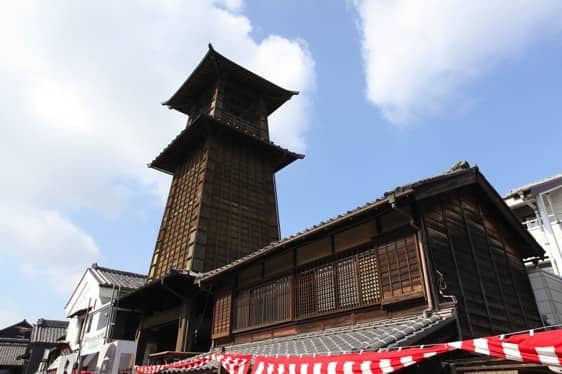
There is one special clock in Kurazukuri that is the symbol of the city. It was built more than 400 years ago by Sakai Tadakatsu - one famous architect of Japan. The clock has diligently rung the same sound everyday, 4 times per day throughout 400 years at 6 am, 12 pm, 3am and 6pm and that makes the city even more unique.
However, we went to Kawagoe not just because of Kurazukuri, there was a big festival in the 3rd weekend of October in Kawagoe that attracts millions of people. This festival, or course, have been there since the Edo time about 350 years ago. In this festival, different big "houses" create float that are decorated very spectacular. These float carrying crafted dolls and people playing instruments along the Kurazukuri area and whenever they meet each other along the way, they will perform hayashi performance with flutes, drums and dancing. It was like singing battle.
The preparation of the float
The street was starting to be crowded
My shark buddy is watching the preparation of the float
Me and Teemu in front of the old clock
It was full moon and the performance was about to start
Teemu was enjoying the traditional sake in the matsuri cup and he apparently did not enjoy me taking his photo :D
Tuesday, 13 September 2016
Transportation in Tokyo for students (and normal people too)
There are many transportation companies in Tokyo that it might be a mess sometimes. However, you can be a pro after 1 month living here.
There are basically 3 big companies:
1. Tokyo Metro (metro, only inside tokyo)
2. Toei Line (I dont use it much because it does not cover cool places in tokyo)
3. JR (train , crowded train :D and it goes to outside tokyo too)
4. Other minor companies like Skytree line, Tobu line, Keisei, Tsukuba express,...
If you are student in University in Tokyo, you can use the unlimited rides discount on the line between your house to school which is about 30 to 400 euros per month :D depends on how far your house is. You can calculate the monthly fee on www.navitime.co.jp/ by putting the metro station of your house and your school to the depart and destination, then search!
and then scroll down to see this in the search result
This means that for university students, 6 months from Nishi arai station to yotsuya station is 38140 yen per month. It is twice as expensive if you are not a student :(.
This can be cool if you live somewhere that the metro line from your house to the school can go through cool places like Ueno, Tsukiji, Ginza, Ikebukuro, Asakusa etc,. then you can enjoy "free" or "unlimited" rides to go to these cool place after school or anytime you want. This fact could be considered when you try to find houses.
The monthly ticket price for students also depends on how many companies included in the line. For example if you live in Ikebukuro and your school is in Yotsuya, there are 3 options
1. JR Yamanote + JR Chuo (transit in Shinjuku)
2. JR Yamonote + Marunouchi line (transit Shinjuku)
3. Only Marunouchi line
Based on Navitime, option 1 is the cheapest and then option 3 is the 2nd cheapest and please do not choose option 2, the combination of different companies brings the most expensive option, it is more expensive to choose your monthly ticket going through JR and Marunouchi line than only Marunouchi line even though only Marunouchi line is longer.
So really, choose wisely the line that you are going to travel. If you like to explore things a lot and do not mind wake up a bit earlier to go to school because the line is longer :D do not hesitate to pay a little bit more to go on the longer line ;). In the ticket office, they will let you choose what you want and pay accordingly.
In my case, I live in Nishi arai and study in Yotsuya. There are 3 options for me
1. Tobu line - Hibiya line - Marunouchi line
2. Tobu line - Chiyoda line - Marunouchi line
3. Tobu line - Hibiya line - JR Chuo line
We chose option 1 because it can go to Ueno, Akihabara, Tsukiji, Ginya and Kokkai gijidomae so whenever we go to these places, we do not have to think for the fee and that is awesome.
If you have any question, I can answer :)
Stay tuned!
Subscribe to:
Posts (Atom)